

Quelles sont les causes du
vieillissement cutané et comment le gérer ?
Les premiers signes de vieillissement cutané :de quoi s’agit‑il et comment les gérer ?
Le vieillissement cutané est inévitable avec le temps, mais l’intensité des signes de vieillissement dépend à la fois de facteurs biologiques et environnementaux, dont certains peuvent être maîtrisés et d’autres non1. Poursuivez votre lecture pour en savoir plus sur les signes de vieillissement cutané, leurs causes, comment les gérer et comment prévenir les signes de vieillissement cutané prématuré.

Le vieillissement cutané est le processus naturel que la peau traverse avec l’âge, en perdant progressivement de son élasticité et de sa fermeté. Parmi les signes fréquents du vieillissement cutané, on retrouve les rides, les taches brunes et la peau fripée. D’autres signes incluent un amincissement de la peau et une tendance accrue aux ecchymoses1.
Le vieillissement cutané touche tout le corps, en particulier les zones exposées au soleil comme le visage, le cou, les épaules et les bras2. En raison de la perte d’élasticité et des plis répétés de la peau, les premiers signes de vieillissement cutané, comme les rides, apparaissent souvent sur le visage, notamment au coin des yeux sous forme de pattes d’oie ou au niveau des sillons nasogéniens, parfois appelés rides du sourire3.
Quelles sont les causesdes signes de vieillissement cutané ?
Les signes et symptômes du vieillissement cutané sont liés à un ensemble de facteurs intrinsèques (innés) et extrinsèques (environnementaux.

Les facteurs intrinsèques sont des éléments inhérents, comme la prédisposition génétique. D’autres facteurs intrinsèques contribuant aux signes du vieillissement cutané incluent :
- Diminution de la fermeté de la peau
Le collagène aide à apporter soutien et résistance à la peau. Avec le vieillissement cutané, la production de collagène diminue et le collagène déjà présent se dégrade plus rapidement4, ce qui entraîne une perte de fermeté et contribue à l’apparition de ridules et de rides.
- Diminution de l’élasticité de la peau
L’élastine est une protéine qui aide la peau à conserver son élasticité et sa capacité à « rebondir » après avoir été étirée. Comme pour le collagène, la quantité d’élastine dans la peau diminue avec l’âge, ce qui contribue à la formation de ridules et de rides5.
- Sécheresse cutanée liée à l’âge
Les glandes sébacées de la peau produisent moins de sébum (huile) avec l’âge, ce qui peut entraîner une peau sèche et des démangeaisons1. La peau sèche peut aussi accentuer temporairement l’apparence des ridules et des rides en raison de la déshydratation6.
Les facteurs extrinsèques proviennent de l’environnement. Ils peuvent amplifier et accentuer les signes du vieillissement cutané, en particulier les signes prématurés liés au soleil, appelés photovieillissement. Parmi ces facteurs extrinsèques contribuant aux signes de vieillissement de la peau, on retrouve notamment :
- Exposition excessive au soleil :
La lumière du soleil est la principale cause du vieillissement cutané. Les rayons UV nocifs contribuent au photovieillissement en provoquant des dommages qui affectent l’élasticité et la fermeté de la peau et favorisent la formation de rides7. Le photovieillissement peut également entraîner des taches brunes induites par le soleil, parfois appelées taches de vieillesse car elles apparaissent plus fréquemment après 50 ans8.
- Pollution :
Les radicaux libres présents dans l’air peuvent endommager la peau, fragiliser la barrière cutanée et réduire l’hydratation de la peau9.
- Tabac
Le tabagisme peut perturber la production de collagène dans la peau et contribuer à l’apparition prématurée de ridules et de rides3. Il peut également favoriser, au fil du temps, l’apparition de rides autour de la bouche en raison du mouvement répété des lèvres lors de l’inhalation de la fumée.

La peau grassevieillit‑elle mieux ?
En matière de vieillissement cutané, la peau grasse peut paraître plus jeune que la peau sèche dans certaines zones en raison d’une concentration plus élevée de glandes sébacées, ce qui lui donne un aspect plus « rebondi ». Toutefois, ce phénomène n’est pas systématique sur l’ensemble de la peau et l’exposition au soleil reste un facteur majeur du vieillissement cutané précoce, quel que soit le type de peau, car elle explique une grande partie des changements visibles au niveau de la peau.
À partir de quand la peaucommence‑t‑elle à montrer des signes de vieillissement ?
Selon la génétique, le mode de vie et l’environnement, l’âge d’apparition des signes de vieillissement cutané varie d’une personne à l’autre.
La production de collagène commence à diminuer dès le début de la vingtaine. Certaines personnes peuvent donc voir apparaître des ridules et des rides dès le milieu de la vingtaine, tandis que d’autres ne remarqueront des signes visibles de vieillissement cutané qu’à partir de la trentaine voire plus tard3.
Peut‑on prévenir ou retarderles signes de vieillissement cutané ?
Il n’est pas possible de prévenir complètement tous les signes de vieillissement cutané, mais certaines mesures peuvent aider à prévenir le vieillissement cutané prématuré. Voici 5 façons de limiter l’apparition prématurée des signes de vieillissement de la peau :
- Se protéger du soleil
Comme les rayons UV sont une cause majeure de vieillissement cutané prématuré, l’une des façons les plus simples de limiter cet effet consiste à adopter de bonnes habitudes de protection solaire : appliquer (et réappliquer selon les recommandations) chaque jour un écran solaire à large spectre avec un SPF 30 ou plus sur les zones de peau exposées, porter des vêtements protecteurs et éviter le soleil durant les heures les plus intenses.
- Ne pas fumer, ou arrêter si vous fumez déjà
Le tabac est un autre facteur de risque de rides et de vieillissement cutané prématuré. En évitant de fumer, il est possible de limiter les signes de vieillissement prématuré que le tabagisme peut entraîner10.
- Adopter une alimentation saine et une activité physique régulière
Une bonne alimentation est importante pour la santé globale, y compris la santé de la peau, et des études ont montré que certains types d’exercices cardiovasculaires réguliers peuvent aussi soutenir la santé de la peau11. La consommation de certaines substances, comme l’alcool, peut avoir, avec le temps, un impact négatif sur la peau12. Il est donc conseillé de demander l’avis d’un médecin pour déterminer quelles habitudes alimentaires, quels exercices et quelles décisions de style de vie sont les plus adaptés.
- S’hydrater
Tout comme il est important de garder la peau bien hydratée à l’extérieur, il est essentiel de boire suffisamment d’eau pour l’hydrater de l’intérieur. Lorsque l’organisme est déshydraté, cela peut se voir sur la peau sous forme de fines lignes de déshydratation temporaires13.
- Dormir suffisamment et de manière réparatrice
Pendant le sommeil, le corps travaille à réparer et à restaurer ses tissus, y compris la peau. Des études ont montré qu’un sommeil de mauvaise qualité chronique est associé à une augmentation des signes de vieillissement cutané intrinsèque, notamment à une barrière cutanée fragilisée. Un sommeil suffisant et réparateur est donc important pour soutenir la peau et aider à éviter les signes de vieillissement prématuré14.
- Utiliser des soins formulés pour les premiers signes de vieillissement cutané
Garder la peau bien hydratée et utiliser des soins spécialement formulés pour atténuer l’apparence des signes de vieillissement cutané, comme les rides, les ridules et les taches brunes, peut aider à soutenir une apparence plus jeune de la peau.
Des soins pour aider àréduire visiblement les signes de vieillissement cutané
Est‑il possible d’inverser les signes de vieillissement cutané ou de les éliminer complètement ? Malheureusement, non. Il existe cependant des moyens de réduire l’apparence de certains signes de vieillissement, comme les ridules, les rides et les taches brunes induites par le soleil, grâce à une routine de soins adaptée.
NIVEA propose plusieurs soins qui peuvent aider à réduire l’apparence des signes de vieillissement cutané tout en laissant la peau douce et hydratée.
Soutenir une peauvisiblement plus ferme avec NIVEA Q10
La coenzyme Q10 est un antioxydant naturel essentiel qui aide à lutter contre les radicaux libres. La peau produit naturellement son propre Q10, mais ces niveaux diminuent au fil du temps. Des soins contenant du Q10 peuvent contribuer à lisser et à raffermir la peau et à réduire l’apparence des ridules et des rides.
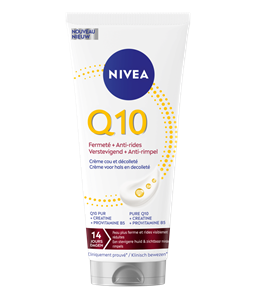
La gamme NIVEA Q10 raffermissante, formulée avec Q10, aide à soutenir l’élasticité de la peau tout en apportant de l’hydratation, pour une peau visiblement plus ferme en seulement 2 semaines en cas d’utilisation régulière deux fois par jour.
Les soins raffermissants NIVEA
avec Q10 pour une peau d’apparence plus ferme
La ligne NIVEA MEN Age Defense répond aux besoins spécifiques de la peau des hommes pour une aparence plus jeune.
Après avoir nettoyé la peau, appliquez le Sérum Avancé NIVEA MEN Age Defense pour réduire visiblement l’apparence des taches brunes et unifier visiblement le teint. Ce Sérum léger à absorption rapide, formulé avec du Thiamidol® et de l’acide hyaluronique, est spécialement conçu pour la peau des hommes : il apporte 24 h d’hydratation et aide à réduire visiblement l’apparence des taches brunes et des rides en cas d’utilisation régulière.

Pour une hydratation quotidienne avec en plus un effet de protection solaire, appliquez le Soin de Jour Visage NIVEA MEN Age Defense SPF30. Ce soin de jour contient une formule adaptée à la barbe avec filtre solaire qui aide à protéger la peau des rayons UVA et UVB* et contribue aussi à réduire visiblement l’apparence des ridules et des rides en cas d’utilisation régulière. Son écran solaire SPF30 à large spectre aide à protéger la peau des premiers signes de vieillissement liés au soleil et sa texture légère, non grasse, apporte 24 h d’hydratation pour aider à prévenir le dessèchement.
*Pour la protection solaire, respecter le mode d’emploi
Pour les pattes d’oie et les rides autour des yeux, appliquez la Crème Yeux NIVEA MEN Age Defense. Cette crème contour des yeux apporte 24 heures d’hydratation et aide à réduire l’apparence des poches sous les yeux, tout en atténuant l’aspect des pattes d’oie et des cernes en cas d’utilisation régulière. Idéale au quotidien, cette crème est spécialement formulée pour les hommes à la peau sensible et laisse la zone du regard d’apparence plus jeune.
Bien vieilliravec les soins NIVEA
Le vieillissement cutané fait naturellement partie de la vie, mais grâce à une bonne protection solaire, à des choix de vie réfléchis et à des soins adaptés, une peau d’apparence plus jeune reste à portée de main. Découvrez les produits NIVEA Skin Firming au Q10 et les soins NIVEA MEN Age Defense pour cibler les premiers signes de vieillissement comme les ridules et les rides et profiter d’une peau hydratée et d’apparence saine.